Showing posts with label Tech. Show all posts

12 Best Music Apps for iPhone Users

Here is a list of 12 mind blowing music apps that will turn your iPhone into a powerhouse of music.

1. Bloom
bloom

Bloom is an interesting and innovative iPhone app which lets you create music and melodies by simply touching and tapping on the screen. The app features a colorful screen which combines artwork and instrument with composition. It can in fact create compositions on its own if left idle along with some stunning visualizations. Other features include 9 different mood settings, random mood shuffle, shake to clear, adjustable delay and much more. It's like an endless music machine. The price is a reasonable $3.99.
Download Bloom iPhone app

2. Chordmaster
chordmaster

Chordmaster is another great app for music lovers that puts a huge library of more than 7,800 guitar chords at their disposal. It displays a virtual fretboard complete with notes and fingerings and virtual chords in various positions on the fretboard. You can strum the strings, in fact even tap individual strings to to hear the specific notes just like in a real guitar. It is priced at $1.99.
Download Chrodmaster iPhone app

3. cleartune
cleartune

Cleartune is a seriously cool iPhone app which helps you tune any musical instrument using your iPhone (or iPod touch which has an external mic). It is a powerful chromatic tuner which displays a note wheel and a fine-tuning meter, both of which let you find the right pitch and tune for your musical instrument. You can tune stuff like acoustic guitar, electric guitar, piano, brass..almost any musical instrument available. The price you pay is $3.99.
Download Cleartune iPhone app

4. Lyrical

If you like checking out the lyrics of a song as much as you like listening to it then Lyrical is a must have iPhone app for you. It automatically finds the lyrics of any song you are playing and also lets you view it offline. You can search for a song lyrics by artist, title or if you just remember some lines from the song, that's enough for lyrical to fetch the corresponding song lyrics. And it's free too !
Download Lyrical iPhone app

5. Pocketguitar
Guitar-App

If you love playing guitar, you'd love PocketGuitar too. It turns your iPhone into a guitar, rather a virtual guitar which you can actually play like a real guitar. Yes, you could press & strum strings and get the real guitar feeling. Choose sounds from 6 different instruments like Electric Guitar, Classical Guitar, Electric Bass and more. Also choose effects like Chorus, Distortion etc. The best part - it's relatively cheap at $0.99.
Download PocketGuitar iPhone app

6. Last.fm

Last.fm, the immensely popular social music site is on the iPhone too. The Last.fm iPhone app lets you access your Last.fm account on the iPhone and listen to your favorite tracks. You can get the music recommendations according to your taste, add tracks to your playlist, purchase tracks directly from iTunes, tag the tracks, share them with the Last.fm community and much more. Certainly offers great features at a great price - $0.
Download the Last.fm iPhone app

7. Midomi Ultra
midomi

Midomi Ultra is a pretty cool iPhone app which can identify music in a snap. You just need to take your iPhone near a speaker and it can identify a song in as fast as 5 seconds. Hence it works like Shazam, identifying music through the iPhone's microphone and naming the song, artist and other stuff. But there are some differences and as the iPhone blog points out, Midomi takes music identification to the next level. That's why it costs $4.99.
Download Midomi iPhone app

8. Ocarina
Ocarina makes one of the most unique uses of iPhone's and iPod touch's touchscreen by turning it into a flute which you can play with your fingers. You can blow into the mic and tap the four virtual holes on the screen, all of which give a cool experience of playing a real flute ( atleast to those who have never touched a flute ). In fact users of the Ocarina community can hear what you are playing in the globe mode. The cost of the app - $0.99.Download Ocarina iPhone app

9. Pandora
pandora

The Pandora iPhone app is the iPhone version of the free personalized radio which is completely integrated with your web based Pandora account. It is easy to use and offers all the Pandora features. You can create a station from the current song or artist, tap the album art to get more information, email the station to a friend, bookmark songs and artists, buy tracks from iTunes and get a nice view in the landscape mode by rotating your iPhone.
Download Pandora iPhone app

10. Pianist


Pianist, as the name suggests, transforms your iPhone into a full fledged 88-key piano. You can play the virtual piano, compose and record music for a playback later, zoom into the keyboard to take a better look and access complex piano features with rich 3D graphics. Obviously it's difficult to imagine the instrument of the size of a piano on a tiny iPhone, but nonetheless this app with its cool features tries its best to create the feel. Cost - $3.99.

Download Pianist iPhone app

11. Shazam

Shazam is an innovative iPhone app that cures your " What was that song ? " problem. It happens to all of us, isn't it. We hear a song, love it, know we have heard it before but just can't recall it. With Shazam you don't need to. Just hold your iPhone near the speakers of the device playing that music. Through iPhone's microphone Shazam gets hold of that song and identifies the album, artist and song title for you. Cool, isn't it ? Oh, and it's free too.

Download Shazam iPhone app

12. Slacker

Slacker gives you access to unlimited free music on your iPhone. It is easy to use and has an elegant user interface. It can stream music from millions of songs from a huge number of artists in its library. You could also listen to over 100 expert programmed radio stations or create your own custom station. The sound quality is great and it certainly emerges as a tough competitor for Pandora. It's free to download.

Download Slacker iPhone app

Via: brainz.org

Hydroptere - World’s Fastest Sailboat


 “Hydroptere” is designed by a group of French engineers in order to show the different perspectives of sailing of transportation on water. After all, this sailboat can accelerate to a speed of 55.5 knots, equivalent to 103 km / h. Hydroptere multihull hydrofoil design allows the sail-powered vessel to reach high speeds on water. As a result, the contact area of the body of water is reduced to a minimum of 2 square meters. Flying sailboat “Hydroptere” since its inception, is regularly hit another record speed as for short distances, and the long ones. The new goal for this ship is to overcome the distance as quickly as possible between Los Angeles and Honolulu, the capital of the Hawaiian islands.


Hydroptere - World’s Fastest Sailboat


Hydroptere - World’s Fastest Sailboat

Hydroptere - World’s Fastest Sailboat

Hydroptere - World’s Fastest Sailboat

Hydroptere - World’s Fastest Sailboat

Hydroptere - World’s Fastest Sailboat

Hydroptere - World’s Fastest Sailboat

Hydroptere - World’s Fastest Sailboat

                                  Via: http://thewondrous.com/

Midnight Planetarium Watch - Now You Can See the Movements of Solar System on Your Wrist Watch

The Midnight Planetarium is an incredible feat of engineering, design and artistic craftsmanship. Besides showing the time, this watch also accurately displays the movement of 6 planets in our solar system as they orbit the Sun.

Each of those 6 planets are represented by a precious or semiprecious stone selected to represent that planet’s color – serpentine for Mercury, chloromelanite for Venus, turquoise for Earth, red jasper for Mars, blue agate for Jupiter and sugilite for Saturn. The two other planets in our solar system were excluded because the lengths of their orbits would make their movements on the watch imperceptible and impractical – Uranus orbits the sun in 84 Earth years and Neptune makes the trip in 164.

The watch took 396 pieces and 3 whole years of work to complete so, along with the precious stones dotting its surface, the $245,000 price tag comes as no surprise. However, one can always dream!

The watch was presented to the public in Geneva at the Salon International de la Haute Horlogeri by the Van Cleef & Arpels jewelry and perfume company in partnership with Dutch watchmaker Christiaan van der Klaauw, who has been creating watches and clocks since the 1970s.

Photo Gallery:

planetarium-watch

planetarium-watch

planetarium-watch

planetarium-watch

10 Products that Google has Killed Off in 2013

This year, the company has sent a host of well-known and more obscure offerings to their demise. But don’t worry, the company still has dozens of new and old products in its portfolio. Here’s a look back at the ones killed off this year.
Courtesy: computerworld.com


1. Google Building Maker
google_building_maker

2. Google Catalogs

google_catalogs

 3. Google Cloud Connect

google_cloud_connect

4. Google Cookies
google_cookies

5. Google Latitude
google_latitude

6. Google Plus Local

google_plus_local

7. Google Reader
google_reader

8. Google Shopper
google_shopper
9. Google Voice App for Blackberry

google_voice_app_for_blackberry

10. igoogle

igoogle

Tech Luminaries We Lost In 2013

http://suryambika.blogspot.com/2013/12/tech-luminaries-we-lost-in-2013.html

Here, we look at the accomplishments of 14 men and women, all pioneers in various facets of the technology field, who died in 2013. 
Courtesy: computerworld.com

1. Hank Asher (May 1951 to Jan 2013)

http://suryambika.blogspot.com/2013/12/tech-luminaries-we-lost-in-2013.html
Most high-tech geniuses wait until college to drop out of school and start companies. Hank Asher didn't make it through high school. He also didn't start programming until the 1990s, after running a painting business and, briefly, smuggling drugs.

He created software used for "data fusion," integrating databases and mining them. He started and sold two data companies, Database Technologies and Seisint, and was trying to turn around a third, TLO, when he died. Among his products were AutoTrack, Accurint and Matrix, a data-mining tool used by law enforcement.

Asher also fought against child pornography, and contributed to relief work in Haiti. He was 61.

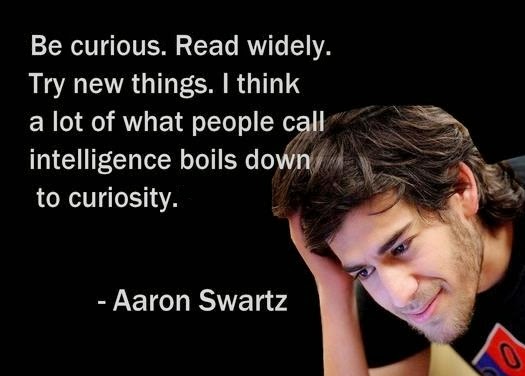
2. Aaron Swartz (Nov 1986 - Jan 2013)

http://suryambika.blogspot.com/2013/12/tech-luminaries-we-lost-in-2013.html

Aaron Swartz was a wunderkind, at 14 contributing code to the RSS standard. Mentored by luminaries like Tim Berners-Lee and Lawrence Lessig, Swartz in his teens founded a company that would be merged into Reddit.

Swartz became an activist, hacking the legal database PACER to make public court decisions freely available. He also hacked into JSTOR, an academic database, for which he was arrested and charged with multiple felonies.

His suicide days before his trial sparked outrage from a broad swath of political, legal and Internet activists, bitter that one with so much promise was now gone. He was 26.

3. Yvonne Brill (Dec 1924 - March 2013)

http://suryambika.blogspot.com/2013/12/tech-luminaries-we-lost-in-2013.html

We can thank Yvonne Brill for making our lives better through satellites. While working for an RCA unit, the brilliant rocket scientist in 1967 developed the hydrazine resistojet, which became a standard for how satellites are propelled through space. She worked on myriad propulsion systems, including for the first weather satellite, the Nova moon rockets and the Space Shuttle.

When she started her career in 1945, few women were in engineering; she couldn't study engineering at the University of Manitoba because the school couldn't accommodate her at an outdoor engineering camp. Her success has propelled numerous other women into science. She was 88.

4. Eleanor Adair (Nov 1926 - April 2013)

http://suryambika.blogspot.com/2013/12/tech-luminaries-we-lost-in-2013.html

Eleanor R. Adair was a bold researcher. So bold, in fact, that she made herself the initial test subject in her work. At the John B. Pierce Laboratory in the 1970s, she began to study the impact of microwaves on squirrel monkeys and on humans, exposing them to its heat effects.

She also would look into whether microwave radiation is harmful to humans. Dr. Adair concluded it was not, and maintained this stance even as cell phones, held directly to people's heads, became widely used. Though others assert carcinogenic dangers from microwave radiation, her work has not been disproved. She was 86.

5. Kenneth Appel (Oct 1932 - April 2013)

http://suryambika.blogspot.com/2013/12/tech-luminaries-we-lost-in-2013.html

Once upon a time, nobody did mathematical proofs with a computer. But in 1976, Kenneth Appel, then a mathematician at the University of Illinois, decided to use a mainframe to prove the "four colors" theorem, which held that for any map, four colors were all that were needed to ensure no adjacent states would be the same color.

Working with a colleague, Wolfgang Haken, and an IBM 360, it took 1,200 hours, but they produced a 140-page proof, with 400 supplemental diagrams. They wrote on a chalkboard, "FOUR COLORS SUFFICE." Math has never been the same. Appel was 80.

6. Amar Bose (Nov 1929 - July 2013)

http://suryambika.blogspot.com/2013/12/tech-luminaries-we-lost-in-2013.htmlAmar Bose liked to solve problems. In 1956, he had a problem with hi-fi speakers he purchased, and figured out how to make them sound better, using reflected sound. He started his now-famous speaker company in 1964 and continued to develop new approaches to acoustics, including working out noise-canceling headphones while on a plane flight.

Bose taught at his alma mater, MIT, from 1955 until 2001, and donated much of his personal wealth to the university. He created a revolution in sound that still resonates. So does his legacy as a teacher and a manager. He was 83.

7. Ken Brill (Sept 1944 - July 2013)

http://suryambika.blogspot.com/2013/12/tech-luminaries-we-lost-in-2013.html

Data centers were a largely inchoate concept until Kenneth Brill decided to make uptime his full-time pursuit. Brill, who had been in the power-supply business, founded the UpTime Institute in 1993. He would use it as a platform to define how data centers should be rated, improve their uptime and encourage more efficient operations.

Brill, in effect, defined the data center, building a foundation on which cloud computing could emerge. He also highlighted how improvements in power supplies were not keeping up with Moore's Law. Brill was 69.

8. Doug Engelbart (Jan 1925 - July 2013)

http://suryambika.blogspot.com/2013/12/tech-luminaries-we-lost-in-2013.html

Fortunes were made from Doug Engelbart's ideas; none by him. One of computing's greatest visionaries, he invented the computer mouse and significantly contributed to the development of hypertext, word processing, graphical user interfaces, networking and real-time collaboration, including videoconferencing. He displayed early forms of all of them in one bombshell demo in 1968.

But he didn't commercialize his ideas; that would be left to others, including members of his lab at Stanford Research Institute, many of whom went to Xerox's Palo Alto Research Center when he lost funding. But then, Engelbart didn't want to get rich; he wanted to enrich human life. And that he did. He was 88.

9. Barnaby Jack (Nov 1977 - July 2013)

http://suryambika.blogspot.com/2013/12/tech-luminaries-we-lost-in-2013.html
It was almost cartoonish, what Barnaby Jack could do with technology. He made ATMs spit out cash, dubbed "jackpotting." He showed how he could hack a pacemaker from 30 feet to make it discharge enough electricity to kill its user.

Brilliant at finding flaws in embedded devices, the New Zealand-born hacker died the week before giving a talk at the Black Hat security conference on how pacemakers and other medical devices could be hacked. Creative and playful, Jack was also ethical — his famous hacks were demonstrated publicly only after the companies involved had a chance to make fixes. He was 35.

10. Ray Dolby (Jan 1933 - Sept 2013)

http://suryambika.blogspot.com/2013/12/tech-luminaries-we-lost-in-2013.html
Back when all sound was analog, cassette tapes were popular. The hiss they made when played was not. Ray Dolby silenced the hiss, with Dolby A for professional studios (1966) and Dolby B for consumers (1968).

Starting with 1971's A Clockwork Orange, Dolby also revolutionized movies and movie-going with the creation of surround sound, additional audio channels. Sound became part of the art form, and Dolby won multiple Oscars. Later, Dolby Digital became part of the DVD standard.

Dolby himself, a modest man, did not trumpet his accomplishments or his highly profitable company. We hear better for them. He was 80.

11. Wayne Green (Sept 1922 - Sept 2013)

http://suryambika.blogspot.com/2013/12/tech-luminaries-we-lost-in-2013.html
Laptops, cell phones, e-mail, consumer computing. The potential for all of them fascinated Wayne Green, who began writing about amateur radio in the 1950s. He put together a publishing fiefdom in Peterborough, N.H., turning the setting for Our Town into a bully pulpit for a tech-centric future.

Green's most influential magazine was Byte, but he published many others, including 73, his long-running amateur radio magazine. Green, who called himself a "conspiracy factist," believed among other things that the moonwalk never happened. But he knew good technology when he saw it. He was 91.

12. Hiroshi Yamauchi (Nov 1927 - Sept 2013)

http://suryambika.blogspot.com/2013/12/tech-luminaries-we-lost-in-2013.html
Hiroshi Yamauchi took over his family's staid Japanese playing-card company in 1949, at age 21. He ran Nintendo until 2002, and was chairman until 2005. He turned Nintendo into one of the world's most important entertainment companies.

Though Yamauchi was not a gamer, under him Nintendo released groundbreaking games like Donkey Kong and Legend of Zelda as well as seminal platforms like the GameBoy and the GameCube. It also began development of the Wii on his watch.

At the Wii's height, Yamauchi was Japan's richest man. He also was majority owner of the Seattle Mariners baseball team, though he never saw them play. He was 85.

13. Clifford Nass (April 1958 - Nov 2013)

http://suryambika.blogspot.com/2013/12/tech-luminaries-we-lost-in-2013.html
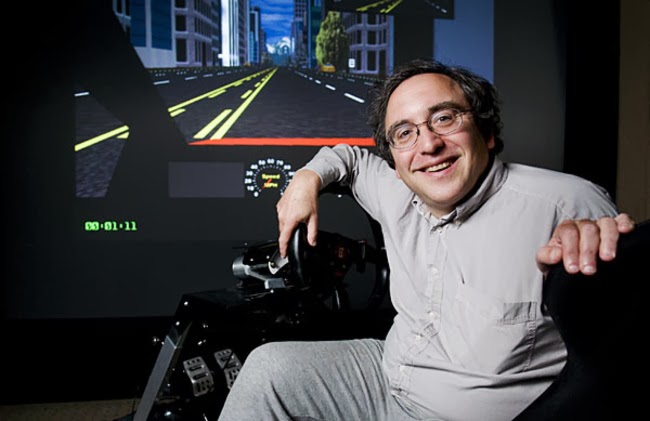
Are you reading this while trying to do four other things? You're a sucker for irrelevancy, in the words of Clifford Nass, a Stanford sociologist who studied how people communicate. You're also becoming the norm, which worried him. He found that multitaskers have trouble concentrating and get worse as they multitask more.

Nass, who helped develop Microsoft Bob, worried that our relationship with technology was making us less intelligent. He said earlier this year, "We've got to make face-to-face time sacred." In his honor, speak face to face with that person you're about to text. He was 55.

14. Willis Ware (Aug 1920 - Nov 2013)

http://suryambika.blogspot.com/2013/12/tech-luminaries-we-lost-in-2013.html
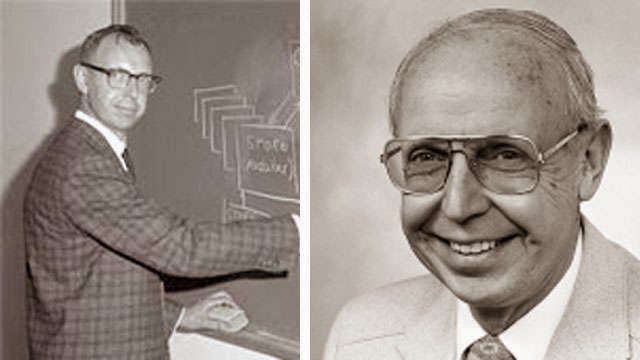
Few saw the future of computing with the clarity of Willis Ware, a RAND engineer who said in 1966, "Every man will communicate through a computer whatever he does. It will change and reshape his life, modify his career and force him to accept a life of continuous change."

Ware worked on classified electronics during World War II, built an early digital computer with John von Neumann, then built another for RAND. Ware in 1972 recommended against secret databases, saying that people should know what data is held on them and how it is used. He was ignored. He was 93.